Showing posts with label best short stories for kids. Show all posts

Tuesday, March 20, 2018

Stories to Grow by Announces Kids Art Contest! Calling all Artists!

Stories to Grow by Announces Kids Art Contest! Calling all Artists!

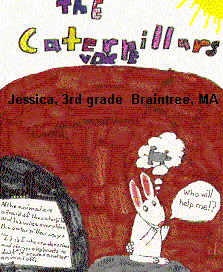
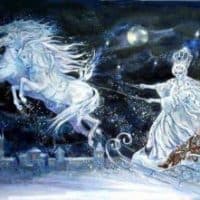
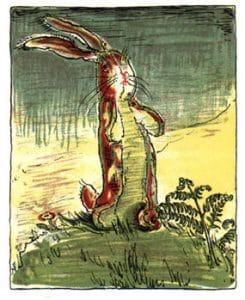
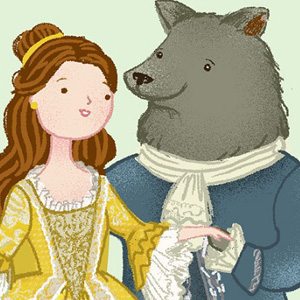
Stories to Grow by is looking to feature Kids Art in our new Audio Storybook series! We are looking for children ages 6-14 to submit original artwork for our Early Reader Stories: The Velveteen Rabbit, Rumpelstiltskin, Rapunzel, Beauty & the Beast, Mulan, The Snow Queen and The Emperor’s New Clothes.
We are asking for submissions by April 1st. The winning drawings (10-15 depending on story length) will be featured in our new Audio Storybooks, published on our award-winning website:www.storiestogrowby.org as well on bookcreator and Ibooks.
For a sample Audio Storybook, see our “A Spider and Robert the Bruce” version:https://www.storiestogrowby.org/a-spider-and-robert-the-bruce-audio-story-book/
Please email submissions or questions to: wdischinger@storiestogrowby.org Include child’s first name only, age, state and country. Thank you!

Tuesday, March 6, 2018

March Themed Stories are Up! GIRLS OF COURAGE


MARCH THEME: GIRLS OF COURAGE 
Stories to Grow by is proud to present our March Theme featuring many of our new "Early Reader" Classic Short Stories in English. Our March focus is on the theme of "Girls of Courage". What an important message in your classroom, specifically in this time of our history. Multicultural Stories such as Mulan, The Girl & the Chenoo, Janet & Thomalyn, and the ever popular "Snow Queen" which the Disney movie "Frozen" is based from. We hope you will find these stories inspiring to read at home as Bedtime Stories or in the classroom. Disney's Mulan is one of my sons favorite Disney movies so be assured that both girls and boys will come away from these stories having learned valuable moral lessons. Happy Storytelling! 

Wednesday, February 14, 2018

The Velveteen Rabbit Lesson Plan ~ Valentine’s Day

The Velveteen Rabbit Lesson Plan ~ February Theme of Love 
The Velveteen Rabbit Short Story for Kids
Velveteen Rabbit Lesson Plan Ideas for Valentine's Day: Creative Writing Tasks  
The Velveteen Rabbit is a beautiful, classic tale of a child's love for his stuffed animal. A motif, as also seen in the Disney movie "Toy Story", of the old toy thrown aside as new, shiny, toys with buttons and lights are received. The stuffed bunny, Velveteen Rabbit, and the Skin Horse wonder about their life as discarded toys.  But Skin Horse assures Velveteen Rabbit,"When soft toys are loved enough, we can become real." 
This story is a favorite childhood classic and our early reader version can be easily used in the classroom for grades K-3rd. It is perfect for Valentine's Day  with the theme of love which is easily accessible to all children. The love for their favorite stuffed toy.  In Kindergarten and 1st grade, the lesson could include am oral reading of the story and the children drawing a picture of their favorite stuffed animal coming to life. Meet standards by having students write a descriptive sentence "I love my ____ because_____." For 2nd and 3rd grade, it can be read for Independent Reading or Read Aloud and then include a writing task: Write a paragraph describing your own beloved stuffed animal. Extend the learning by having students be creative and write a short story about how their stuffed animal became real. Or a persuasive story about why their stuffed animal deserves to become real. Happy Valentine's Day & Happy Storytelling! 

Friday, February 9, 2018

Beauty and the Beast Classic Fairy Tale Lesson Plan

February Theme of Love: Finding Love Where You Least Expect It

February: the month of LOVE and surely there are plenty of stories which cover the “traditional” love story. Our worldly stories, however, teach us so much more about love than just that.  This month we will explore love stories, each from a different country and each with their own unique message about what it means to love and be loved in return. This week’s stories are about finding :Love Where You Least Expect It".  Below you will find suggestions for a Beauty and the Beast Love Lesson Plan for both grades 2-4 and 4-6.
beauty and the beast Beauty & the Beast Love Fairy Tale 
The classic tale from France of a beautiful, smart, young girl who finds herself entrapped with a hideous Beast to spare her father’s life; a Beast who turns out to be more than what he seems. A tale as old as time…..
A story from France, this European Folk Tale is a wonderful tale of love that builds from friendship. Much like Disney’s version, but with some differences, there is also a secondary plot regarding three sisters, Beauty being the youngest, most humble, and the one to put the love for her father above her own wants and needs. She willingly goes to take his place and live with the Beast, whilst her older sisters only care about their selfish ways, getting their riches back and finding husbands who will “suit” them. An exploration of love in many forms, this tale analyzes love between a father and daughter as well as love that comes from truly learning to value another for their heart and not their looks. Beauty finds “Love Where She Least Expects It”, a love grown from friendship and true admiration for ones’ best qualities.
We offer two versions of this story: The Classic Version suited for a 4th-6th reading level and an "Early Reader" version in simple English suited for those with a 2nd-4th reading level.  This Fairy Tale offers a wonderful opportunity to meet Common Core Standards of Comparing/Contrasting Text to Film. The animated Disney version varies from the new recent version, which more closely meets the original classic tale. Another idea is to use the text to Debate Ethics:Does the punishment meet the crime? Last, I like to use this tale to analyze Point of View and write a Fractured Fairy Tale. What would this story look like from the Beast's perspective?

Tuesday, January 16, 2018

LOVE DISNEY'S FROZEN? OUR NEWEST EARLY READER IS "THE SNOW QUEEN" ADAPTED FROM HANS CHRISTIAN ANDERSEN!

The Snow Queen: An Early Reader Version Adapted from Hans Christian Andersen. 
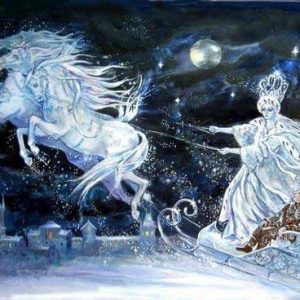

The Snow Queen
By Елена Ринго - www.elena-ringo.com,
CC BY 3.0,
 https://commons.wikimedia.org/w/index.php?curid=28303832
The Wizard’s Mirror
Once there was an evil wizard who made a mirror that had a special dark magic.  Anything good or beautiful, when reflected back in this evil mirror, only looked rotten and gray.  
The wizard was very pleased with his evil mirror!  He laughed and laughed, and wanted to show it to the whole world.  So he flew up high into the sky, but the mirror started to shake.  It shook so much that the wizard could no longer hold on to it, and it dropped down to earth.  The mirror smashed into millions, billions, trillions of tiny sharp bits of glass that flew all over the place.
If a tiny sharp bit of that evil glass landed in anyone’s eye, from that time on, the person would see only the bad and dark in people and things, and no more see the light and good.  So it was in this land for hundreds of years.
Years later, a boy named Kai and a girl named Gerda lived next door to each other.  When they opened their bedroom windows, they could easily talk to each other.  What’s more, there was a roof gutter that ran between the two attic windows.  Inside the gutter their families had planted a garden where vegetables and roses grew.  Kai and Gerda’s families were poor and they had no toys to play with, but they did not mind.  That garden was where the two friends played, and they were happy.

When their bedroom windows were open, they were so close they could easily talk to each other.

One day, Gerda and Kai were reading a book in the garden.  All of a sudden, a gust of wind blew a bit of that sharp evil glass into Kai’s eye.  Kai threw down the book, right on top of the roses.  He yelled that he did not want to read any more.  Gerda picked up the book and set the broken roses up again.  She asked if he wanted to play a clapping game instead?  But Kai cried out “No!”  He said he never wanted to play with Gerda, ever again!  
The Snow Queen
The next day, Kai pulled his sled to town.  He wished his sled would go faster!  Then he saw a big white sleigh coming up the road.  As it passed, Kai quickly tied his sled’s rope to the back of the sleigh.  Now he could ride very fast behind the sleigh!  But what Kai did not know is that one driving the sleigh was the Snow Queen herself.  
The Snow Queen, in her white fur coat, had known that Kai was up ahead on the road.  She had slowed down her sleigh when she got closer to Kai, giving him a chance to tie his rope to her sleigh.  Then she had ridden off very fast, with Kai speeding behind her.

The one driving the sleigh was the Snow Queen herself.


Wednesday, January 10, 2018

OUR NEWEST EARLY READER: THE VELVETEEN RABBIT!

We are proud to present the newest addition to our Early Reader Collection: 


The Velveteen Rabbit-"Early Reader" English Stories for Kids


In a boy’s toy box there lived a soft and plushy Velveteen Rabbit.  For a short time, the boy played with the Velveteen Rabbit, but that was before brighter toys came along.  Some of these toys could move if you pushed a button.  Others would bounce high if thrown in the air.  
Velveteen Rabbit had no button to make it move.  If thrown in the air, Velveteen Rabbit would only fall softly to the floor.  All the other toys in the toy box talked with pride about the fine things they could do.  And with them, Velveteen Rabbit did not say much.
Only one other toy in the toy box was like Velveteen Rabbit.  Skin Horse was a soft, plushy toy.  But he was old.  Most of his hair had been worn away a long time ago, and he had only one eye left.  Skin Horse said to Velveteen Rabbit, “Soft toys like us are lucky because we can get loved the most.  And when soft toys are loved enough, we can become Real.”
“What is Real?” said Velveteen Rabbit. 

Monday, January 8, 2018

HAPPY NEW YEAR, HAPPY NEW THEME: SERVICE/HELPING/JUSTICE

Our January themed stories are up! This month's short stories focus on the Themes of Service/Helping/Justice. Such stories of a king who goes in disguise to see how his people live, a story about a poor man who entrusts his life savings to a king who steals it, and even a true tale about a rebellion in Spain against their overlord. Our Moral Stories feature positive messages and will leave a lasting impression! Look for lesson plans for these stories coming soon! 
https://www.storiestogrowby.org/free-short-stories-kids/

Thursday, November 30, 2017

EVEN MORE! EARLY READERS ARE HERE

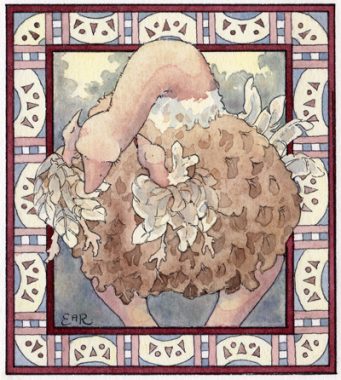
We've heard you and we listened! You are loving our Early Reader versions of our most popular stories so we've added even more and are working on brand new ones for the coming week! We've added "Fur & Feathers" (what will Mama Ostrich do when Mama lion steals her chicks and calls them her own?), "The Empty Pot" (Jun's seed does not sprout...how can he compete with the other boys plants to become Emperor?), "The Ram & the Pig" (A classic tale similar to the Three Little Pigs, Pig & Ram go to build their house in the woods, but what about the wolf?), and a very popular Aesop's Fable "Androcles & the Lion" (Androcles, an escaped slave, meets a lion in the woods. The tale of an unlikely friendship). Be sure to check out our December Themed Stories published this Friday! Our Theme for December is "Self-Reflection" with our focus on three tales: The Girl Who Changed Her Fate, Haku's Power and the Enormous Nose all with lesson plans! Happy Storytelling! 

Tuesday, November 21, 2017

EARLY READER VERSIONS ARE HERE!


Stories to Grow by is proud to present Early Reader versions of our most popular stories! You will find such stories as "The Apple Dumpling", "A Caterpillar's Voice" and "Fur & Feathers" , plus more on the way!, in shortened form with simpler language for younger students or those learning English. While they are shorter and simpler to make a wonderful Bedtime Story or Classroom edition for the younger grades, they are still full of the wonderful positive messages each one contains! Remember all our stories are kid-tested (my 2nd grader has read each version to ensure an easy, memorable read)! So visit www.storiestogrowby.org, search for a Story or Script by age range, read time or Theme (we have some wonderful stories for Thanksgiving and the Theme of Gratitude) and share a Storytelling experience sure to leave a lasting impression. Stories to Grow by thanks you all for your continued support of our Stories & Mission. We wish you all a very Happy Thanksgiving. 

Tuesday, November 14, 2017

Teaching Kindness in the Classroom with "The Talking Fish"

"A kindness is never lost, even if you throw it into the water."

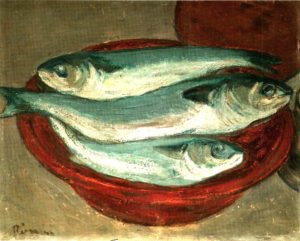
This is the theme of the "The Talking Fish".  A folktale from Armenia, The Talking Fish tells the story of a poor, desperate fisherman's assistant who throws a magical talking fish back into the sea and is fired. On his way home, downtrodden and depressed, he comes upon a "monster" whom offers him a cow to sustain his life for the next three years, but when the monster returns, he must repay him by answering three questions lest he, his wife and the cow become the monsters' property. Seeing no other way, the fisherman agrees. Three years later the monster returns, but how is the poor fisherman to answer his absurd questions? "A kindness is always repaid". Click here to find out the magical ending to this story...

This short story provides an opportunity to cover ELA skills on "Making Predictions and Drawing Conclusions" while also focusing on Character Education and Kindness. In the beginning of the story, students can draw conclusions about the type of character the fisherman was for throwing the fish back despite his poor disposition and possible loss of his job. They can then predict what will happen after the man foolishly agrees to the terms of the monster. Finally, students can predict/draw conclusions on if and how "The Talking Fish" might repay the fisherman's kindness. Lastly, students can work on Determining Theme through explicit text: What does the final statement mean: “A kindness is never lost, even if you throw it into the water.”? 

My sons are in 2nd grade and Kindergarten and their school theme this year is KINDNESS. They talk about the books "How Full is Your Bucket" and "Have you Filled a Bucket Today". The Principal even went into each class to read these stories to the students. Classes are focused on teaching students to be a "Bucket Filler" not a "Bucket Dipper". Kids write post-its and put them into a Kindness bucket when a fellow class member does something to "fill their bucket". I mention this because our story "The Talking Fish" and many of our other stories teach these important themes effortlessly. They can easily be shared in class as mini-lessons, not only to teach ELA standards, but to work on Character Education. We all want our students and children to be successful with their grades, but most importantly, I think, we want them to be KIND. Happy Storytelling! 


Monday, November 6, 2017

Repost: Teaching the Theme of Gratitude with Stories to Grow by

New Lesson Plan Coming this Week on Stories of Giving and Kindness! Three Stories with a Theme of Gratitude:
For Classroom Use at Thanksgiving and Year-Round

Thanksgiving is almost here! How will you be teaching the theme of Gratitude in your classroom this year?

We look for thought-provoking stories that encompass the virtues we hope our students showcase, not only around the holidays, but all throughout the year.  One free resource is  Stories to Grow by, an award-winning selection of kid-tested multicultural stories. The three tales featured below provide shining examples of Thanksgiving themes such as Gratitude, Friendship, and Kindness.  Dramatic versions of the first two stories are also freely available as Reader’s Theater and can offer entertaining read-aloud opportunities.  

Androcles and the Lion Androcles is an escaped slave who runs away from his cruel Roman master.  Wandering in the woods, he meets a lion in distress. This Fable comes from the collection of “Aesop’s Fables.”  Aesop is credited as author of hundreds of fables, many of which are still taught as morality lessons and used as subjects for various entertainments, especially for children's plays and cartoons.  Help yourself to Stories to Grow by’s Reader’s Theatre script for “Androcles and the Lion.

Baba Yaga Natasha is sent deep into the forest by her stepmother to face the witch Baba Yaga.  Baba Yaga has the frightening power to embody her hut, such that the hut stands on hen’s legs and hops about to chase its child-victims. In this classic Russian fairytale, Natasha befriends several enchanted creatures trapped by Baba Yaga, and they in turn help Natasha to escape.  Help yourself to Stories to Grow by’s Reader’s Theatre script for “Baba Yaga.

The Queen and the Mouse:  A Queen is captured and imprisoned, along with her infant daughter, in the tallest room of a tower.  She has but one friend – a charming dancing mouse. This French fairytale drives to a moment of reckoning when a magical old woman offers the Queen a chance to free her baby daughter – but only if the Queen hands over the mouse.

The content of the three tales can also prompt skill-building for “Making Predictions” as well as “Cause and Effect.” Additional stories and Reader’s Theatre scripts, as well as teaching materials and Common Core alignments, are available at storiestogrowby.org.

Thursday, November 2, 2017

November Themes of Giving and Kindness: New Lesson Plans Coming Soon!


pumpkin in a jar
Happy November! 
Themes of Kindness and Giving

I can hardly believe it has been a year since I started this blog to bring you Lesson Plans surrounding our wonderful stories. I hope that you have found them to be useful in your classroom or at home with your little ones. Reading is so much more than just the words on the page; it is an experience to be shared, a lesson to be learned, a value to be appreciated. I am so proud that our stories bring to life lessons from the past, passed down from generation to generation to bring enlightenment and wonder to children from all over the world. Our stories connect people, children and adults alike and I hope you have found a way to use them to both teach and inspire. 

This month our Lesson Plans will focus on stories surrounding Kindness and Giving. If you've been with us since the beginning, you will see familiar lessons on such stories as "The Apple Dumpling" and "Wali Dad". New Lesson Plans starting next week with focus on such stories as "The Talking Eggs", "The Talking Fish" and "The Troll's Ride". These are some of our most popular stories and I am proud to present them to you and offer ways to use them in your classroom or at home to promote Kindness and Giving, not just at this time of year, but all year round. Happy November! 

Thursday, October 19, 2017

The Goblin's Market Lesson Plan: Poetry Analysis for 10th-12th Grade


I am so thrilled to bring you this lesson plan! While I usually don't write about myself, I did want to share a bit of my bio before introducing our new lesson plan. Before being the Director of Stories to Grow by, I was a teacher like most of you! I've taught every grade from 4th-12th, including adults, but my most favorite teaching years were when I taught 10th-12th grade. I taught Career Level, College Prep, Honors and my absolute favorite, 11th & 12th grade Advanced Placement English Literature & Composition. Working on this lesson geared for High School was an absolute pleasure as most of our works are for Elementary & Middle School students. I hope you enjoy it and find it useful for your own classroom. Happy Storytelling! 


Best,
Wendy (AKA Whootie Owl :)


The Goblin’s Market Lesson Plan
A Spooky Poem for a Poetry Analysis: Grades 10th-12th

Looking for a fun, engaging lesson plan to tie into Halloween while also meeting standards for Poetry Analysis? Our adapted version of The Goblin’s Market by Christina Rossetti is a thrilling poem which not only ties perfectly into an October unit, but also is perfect for a poetry analysis since it contains so many poetic features such as Rhyme, Figurative Language, Symbolism, and more!


Two dear sisters; two different personalities. Sarah is enamored and mesmerized by the goblin’s market and their fruits for sale; Lizzie remembers the cautionary tale of a girl who had eaten the goblins fruit, and is deterred. Lizzie is able to fend off the goblins and their forbidden fruit, while Sarah succumbs to the trickery. Can Lizzie save her once the damage is done? A poem chock full of Themes, Symbolism, Imagery, Figurative language and Allusion (beware the “forbidden fruit”) which could easily springboard this lesson plan into many...this poem is one that will keep your students on their toes while learning valuable skills in analyzing poetry and its much deeper meaning.

This lesson plans meets Common Core Standards for CCSS.ELA-LITERACY.RL: 10th-12th grade, with strands in Key Ideas & Details, Craft and Structure, and Integration of Knowledge and Ideas (Depending on what your focus is with this poem analysis).

Objectives: Use higher-level thinking skills to analyze a piece of poetry, focusing on poetry elements: Structure, Language, Details and Themes to determine the Author’s Purpose. 

Anticipatory Set: Assuming the notion that Good usually prevails over Evil, describe a time in a piece of literature where Evil prevailed, even if only for a bit.

Activities: Students will read the Goblin’s Market Poem first to themselves, then read orally (I like to read myself so students are free to focus on the language and rhythm and taking a second look at some of the poetic elements while I read). It is then time for the analysis. This lesson assumes that students are familiar with the main poetic elements: break the students into groups and give each group 3-4 stanzas. Print out copies of the poem so students can annotate on their paper…groups should identify: Rhyme Scheme, Figurative Language (Most stanzas have examples of Alliteration, Simile, Metaphor), Imagery, Diction, Tone. I like to have each person in a group in charge of each element and then they discuss the findings amongst the group. Once the groups are complete, I have each group present their part and their findings so students can mark up their own poems. This will assist with the final task: finding the Theme & Author’s purpose of the poem. This leads to the discussion and determination of the Theme of the poem. As a challenge, I would ask the students to also identify the Allusion in the poem (depending on grade and level). Discussing this as a group will help students with the closing task of identifying the Author’s Purpose.

Closing: Explore the Allusion with the class of the “Forbidden Fruit”. Have students return to their groups to define what they think the Author’s Purpose was with this piece. They must include at least three pieces of evidence from the text to support their hypothesis.

Extension: Discuss the layers of the poem. Students should walk away with an understanding that the base layer of the Theme of a piece of work does not always correlate with the deeper meaning of the Author’s Purpose for writing the piece. As an extension activity and to meet common core standards, students could then analyze the Bible passage from Genesis about the forbidden fruit and compare/contrast with this poem.  

Thursday, October 12, 2017

Our Bedtime Stories are getting a Kid-friendly makeover! Kids Art---Yes!

Over the years we've been collecting kid art inspired by our stories and we are excited to be bringing it to you-our readers! Starting with our Bedtime Story collection, you will see exciting new images as you read our bedtime stories to your little ones. Using our stories in the classroom? Your students will be engaged by the art made by kids their own age! We would also love to have new submissions! Submit your kid-inspired art for one of our stories to info@storiestogrowby.org and you might just see it on our website! Happy Storytelling!
Here is a sample for our Featured Story and Lesson Plan this week for Baba Yaga:


Monday, October 2, 2017

Fairy Tales for Fall! Spooky Classic Stories and Reader's Theater Scripts.

Enjoy our Fall Fairy Tales! A bit spooky Stories and Reader's Theater Scripts for kids of all ages! Stay tuned for our Reader's Theater Script Lesson Plan for Baba Yaga coming soon! This is our most popular Reader's Theater Script and I am working on a wonderful Lesson Plan focusing on plot development and structure as well as a fun, engaging activity to look at this story from the various "characters" points-of-view. Our October Newsletter goes out today as well! If you haven't already joined, get on the list! Join our Forum to subscribe. Happy Storytelling!

Wednesday, September 27, 2017

Fairy Tales for Fall: Coming in October! Spooky Stories and New Lesson Plans!

Here's a Preview of our October Themed Stories & Lesson Plans:

Fairytales for Fall: Halloween Stories of Courage, Love, & of course, Good vs. Evil

The Goblin’s Market
A poetic tale of sisterly love and how far one sister will go to save the other. A classic Christina Rossetti piece, adapted for kids in grades 3rd -8th. This poem, also available as a Reader’s Theater, is perfect for Halloween: Teach Poetic Analysis alone or while putting on a fun and engaging Reader’s Theater Performance. Look for our Lesson Plan on covering such skills as Rhyme, Figurative Language, Imagery and more!  Preview the Poem Here. 


Baba Yaga 


Russian folklore tells of the scary witch, Baba Yaga. In this version, our main character, Natasha, is sent deep into the woods by her new, evil stepmother, to search out her “sister” Baba Yaga. Natasha meets many “characters” along the way who help her to escape the wrath of her evil aunt. Available as both a Short Story & Reader’s Theater Script for grades 2nd-5th; the Lesson Plan for this tale will focus on looking at the structure of a story, as well as a fun activity on writing the tale from various character points-of-view.

Ogre’s Feather

Would you volunteer to save your king by visiting a man-eating Ogre in a land far, far away? In this tale from Italy, a brave courtier offers to trek to the Ogre’s lair and pluck his feather to save the dying king. On the way, he meets a range of characters who each need a feather and a favor. Will the young courtier prevail? Available as both a Short Story and Reader’s Theater Script for grades 3rd-8th, this Lesson Plan will focus on how Characters respond to Challenges as well as how the Sequence of Events contribute to the Theme/Moral. 

Wednesday, September 13, 2017

NEW Lesson Plan! Theme of Honesty & Understanding Characterization

Teaching the Theme of Honesty while Understanding Characterization
with
“The Empty Pot”
Stories to Grow by

Looking for a great text on teaching the Theme of Honesty? Would you also like an incredible Folktale to help teach the importance of Characterization, both literally and figuratively, exploring how decisions both affect us positively and negatively? At the same time, would you like to build student engagement, fluency and comprehension while exposing students to multi-cultural stories from all over the world with positive moral messages? Then we have the lesson plan for you! Utilize the below lesson plan with our Reader’s Theater Script, “The Empty Pot”. It would also work nicely with the Story version as well. A positive message while teaching an important literary skill: this is what you will find in all the Stories to Grow by Stories and Reader’s Theater Scripts. This week’s themed story is The Empty Pot from China:

The Empty Pot:

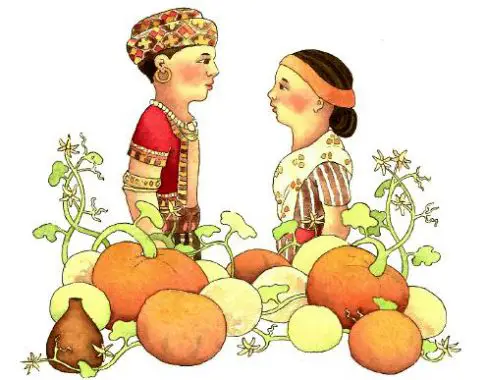
A group of boys who wish to be the next in line for Emperor are given "royal seeds" to grow in six months’ time; whomever flourishes the best plant will be crowned the successor. However, what the boys don't know, is that they've been tricked to test their character! The "royal seeds" have been baked and therefore won't grow a magnificent plant. Will any of the youth be honest despite looking foolish and show up empty-handed or will they give in to their desire to be Emperor, at the cost of being dishonest, and "grow" a plant with a seed other than the one they were given? A true testament to character when such a large prize is at stake. Find out here! Read the Script or the Story.

The content of this tale prompts skill-building for the Common Core Standards CCSS.ELA-LITERACY.RL.2.2, 3.2, 3.3, 4.2, 5.2:

Unit Essential Question: How has Honesty played an important role in your relationships with others?


Tuesday, September 12, 2017

The Theme of Honesty Part 2: The Empty Pot

Stay tuned for our next Lesson Plan on the Theme of Honesty with a wonderful story from China: The Empty Pot. The Lesson Plan will cover Common Core Standards for Understanding Characterization with this tale that explores the character traits of youth, specifically with being truthful, but not wanting to look foolish at the same time. A group of boys who wish to be Emperor are given "royal seeds" to grow in six months time; whomever flourishes the best plant will be crowned the successor. However, what the boys don't know, is that they've been tricked to test their character! The "royal seeds" have been baked and therefore won't grow a magnificent plant. Will any of the youth be honest despite looking foolish and show up empty-handed or will they give in to their desire to be king and "grow" a plant to try and win the contest. Read it here and look for our Lesson Plan for this tale tomorrow! 

Thursday, September 7, 2017

Reader's Theater Script Lesson Plan: The Native American Cinderella